


How to Layer Chic Winter Outfits Without Looking Bulky
, by ellen b., 10 min reading time
Winter layering that stays chic: learn how to build outfits with fitted base layers, slim mid-layers and structured coats that look polished, not bulky.
Quick Summary
Good winter layering works by giving each piece one job: a fitted base, one insulating mid-layer, a structured outer layer and one textural accent. Keep the outer layer's hem at or just below the hip and let only one layer be voluminous at a time, so the outfit stays warm without looking bulky.
Last Updated: November 2, 2026
Most women who try winter layering end up looking like they simply put on more clothes. The problem is rarely the number of pieces, it is proportions, fabrics and fit. ellen b curates a Fall/Winter '26 edit built around exactly these details.
The most common mistake is stacking too many bulky pieces. A thick knit under a padded coat under an oversized scarf hides the body rather than framing it, each layer adds volume.
Watch out: buying a coat a size up "for layering" almost always makes the outfit look shapeless.
Winter layering works best when each piece has one job.
| Step | Purpose | Best Choice |
|---|---|---|
| Base layer | Fit and comfort | Fitted jersey or fine knit |
| Mid-layer | Warmth without bulk | Cardigan or lightweight knit |
| Outer layer | Structure | Tailored coat |
| Accent | Polish | Cashmere scarf or leather |
These three formulas each solve a different winter condition while keeping the silhouette clean.
Mild cold (roughly 4-10°C): the office-to-evening formula. Begin with a fitted fine-gauge knit. Add the Essentiel Antwerp Cardigan in brown (€259.00) as a relaxed mid-layer, its double-breasted fastening and notch lapels give structure, so it sits neatly under a coat without adding bulk at the shoulders. Finish with a tailored wool coat rather than a padded one; keep trousers slim and choose a boot with a defined shaft.
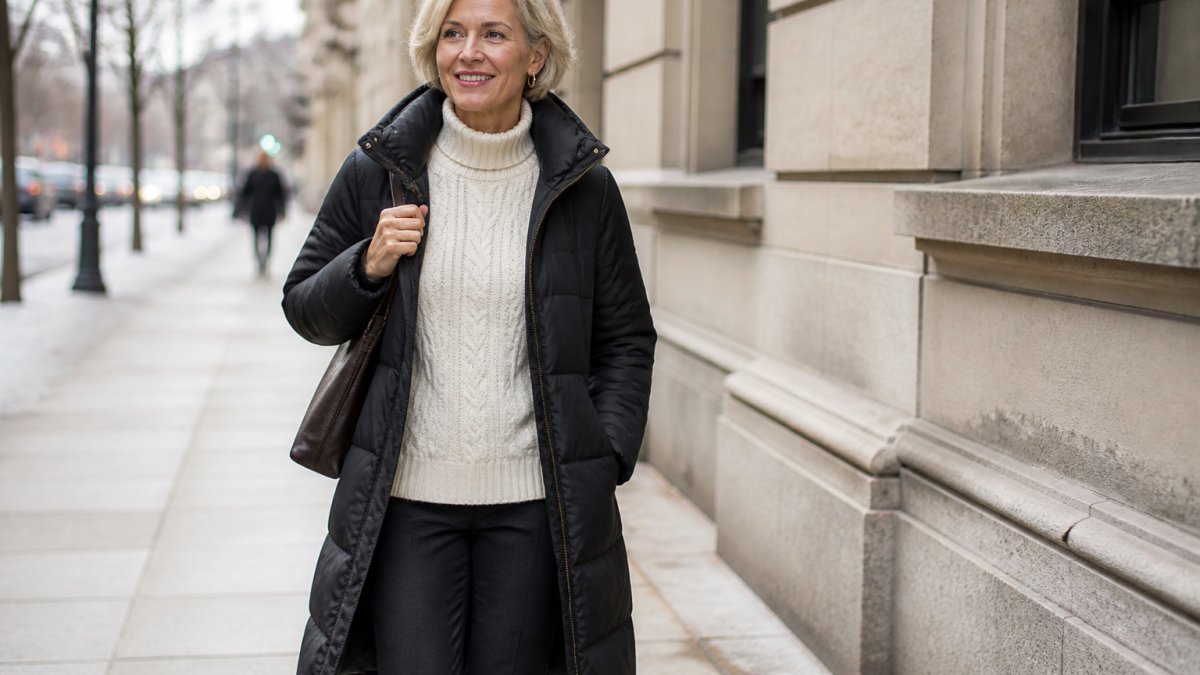
Freezing temperatures (around 0°C and below): the warmth-to-weight formula. Swap the fine knit for a fitted cream cable knit jumper from Gran Sasso (€310.00), cable knits trap more air than flat jersey. Add the slim black Herno Puffer Coat (€749.00) as the outer layer; a slim puffer insulates through lofted fill without the boxy shape of an oversized padded coat.
Wind and rain: the transition formula. Wind strips warmth from loose layers, so choose a tight-knit mid-layer and a coat with a close collar. The Mos Mosh Enata Cashmere Knit Scarf in Delicioso (€125.00) wraps close to the neck and adds texture without bulk; wrap it loosely rather than knotting it tight. For indoor-to-outdoor transitions, a cardigan over a fitted knit is easier to remove than a jumper over a blouse.

Proportion rules for every formula. Keep the outer layer's hem at or just below the hip, keep trousers slim, and let only one layer be voluminous at a time. If the coat is relaxed, the mid-layer should be fitted; if the mid-layer is chunky, the coat should be structured. Browse the full winter knitwear edit for more mid-layer options.
Watch out: adding a chunky scarf to an already bulky coat is the fastest way to lose the waistline, choose a fine cashmere or wool scarf instead when the coat is padded.
Fabric choice decides how much bulk an outfit carries. The useful question is not "is it warm?" but "how much warmth per millimetre of thickness?"
Wool and fine-gauge merino give the best warmth-to-weight ratio for office wear. A fine-gauge merino knit layers flat under a coat, breathes in heated offices, and resists odour better than synthetics. Crisp woven wool suiting holds its shape, adding structure rather than volume.
Cashmere is warmer per gram than lambswool and softer against the skin, making it a good base or scarf choice. It is less durable under friction, so reserve it for scarves, fine knits and cardigans rather than trousers or bag straps.
Silk adds almost no warmth but a smooth, low-friction surface. A silk camisole or blouse lets the mid-layer slide over it instead of bunching, which is why it works well as a base under knits.
Fleece and technical fabrics insulate through lofted air and dry quickly, but they are bulky per unit of warmth and can trap heat indoors. Use them for weekend and outdoor layers, not office outfits.
Chunky knits add warmth but also volume, so save them for days when the coat is structured and slim. The rule of thumb: the chunkier the knit, the slimmer the coat and the trousers.
Care and durability. Wool and cashmere last longer with less frequent washing, air them between wears, use a knit comb to remove pilling, and wash cold on a wool cycle with a pH-neutral detergent. Silk needs a cool hand wash or delicate cycle. Fewer, better-cared-for pieces layer more reliably than fast-fashion knits that lose shape after a season.
Building a capsule from what you own. Before buying anything, lay out your existing base, mid- and outer layers and check that each combination has one fitted piece and one structured piece. A fitted base, one cardigan, one structured coat and one fine scarf cover most winter days. For a deeper look at fabric choices, see the winter office wear guide.

Watch out: buying a chunky knit to solve a cold-office problem usually makes the outfit bulkier without making it warmer, a fine merino layer plus a scarf traps more heat with less volume.
Start with a fitted base layer, then add one slim knit rather than two bulky ones. Keep the mid-layer close to the body and choose a lightweight outer layer with clean lines, such as the Herno Puffer Coat in black at €749.00. Balance volume by keeping one piece relaxed and the rest streamlined, and let the hem of your outer layer sit just below the hip so the silhouette stays defined.
Cashmere and fine merino give the most warmth for their weight, so they layer well without adding bulk. The Gran Sasso Cable Jumper in cream, priced at €310.00, is a high neck knit in a mix of wool, cashmere and viscose with a polished finish. A 100% cashmere triangular scarf, such as the Mos Mosh Enata in Delicioso at €125.00, adds insulation at the neck without crowding the shoulders. Choose fabrics by how warm they are relative to their weight, not by thickness alone.
Three layers is the practical limit for most days: a fitted base, one mid-layer and a structured outer layer. Add a scarf or accessory for extra warmth instead of another garment. Indoors, remove the outer layer first, so the outfit still looks intentional when you are not wearing a coat.

